





★★★★★
I was delighted to receive the support, advice and comfort which navigated me seamlessly through this process. I highly recommend Anthony and Sebastian to anyone.
Nick LOct 2026

Rogalski Lawyers specialises in WorkCover, motor vehicle, public liability, TPD and medical negligence claims, and on asbestos and silica dust disease claims anywhere in Australia. Every claim is run no win, no fee*.




Explained the way we'd want it explained to our own family.
How every matter is handled
Who we are
The firm is small by design. Each solicitor carries a caseload built to leave room for the people on it, and you deal directly with the lawyer running your file, not a case manager or a call centre.
WorkCover, motor vehicle accidents, public liability, TPD, medical negligence and dust disease, and nothing else since the firm began. Dust disease, asbestos, silica and coal miners' lung, is the specialty most firms don't practise at all.
The solicitor who takes your first call is the one running your matter, and they have the capacity to know your file properly.
Enquiries are returned the same business day, and questions during your claim are answered by the person who knows your file.
Practice areas
Whether it happened at work, on the road, in a public place, through medical treatment or through dust exposure, one of these covers it. Pick the closest match.
Statutory WorkCover Queensland claims after a workplace incident or work-related condition, and the common law claims that can follow where an employer's negligence contributed.
Compensation after a motor vehicle accident in Queensland, through the Compulsory Third Party scheme. Drivers, passengers, motorcyclists, cyclists and pedestrians.
Total and Permanent Disability benefits held through superannuation, when illness or a medical condition means you are unlikely to return to work you are suited to.
Claims where someone else's carelessness caused harm, whether in a shop or venue, on a footpath, on private property, or through a faulty product.
Harm caused by care that fell below the accepted standard, from a doctor, hospital or health service, including misdiagnosis, delayed diagnosis and surgical error.
Asbestos, silica and coal dust conditions, where the exposure usually happened decades before the diagnosis and the evidence has to be rebuilt.
Mesothelioma, asbestosis, asbestos-related lung cancer and pleural disease. Handled Australia-wide, and the firm will travel to you.
Lung cancer caused or contributed to by asbestos, silica or other workplace dust, including where the person also smoked.
Silicosis from engineered stone benchtop work, tunnelling and excavation through rock such as granite, grinding wheels and other silica dust exposure.
Coal workers' pneumoconiosis and the other mine dust lung diseases, for underground and open cut coal mine workers and the people who maintained the plant.
Illness linked to prolonged exposure to mould or damp in rental housing, workplaces or public buildings.
Claims arising from abuse in schools, churches, care and other institutions, including through the National Redress Scheme. Handled with care, at your pace.
How it works
Claims differ, but nearly all of them start the same way, and the first step costs nothing.
Step one
Call or send a short enquiry. The first conversation is with a lawyer, not an intake team.
Step two
You describe what happened. You'll be told whether there's a claim worth looking at, which pathway it runs through, and what happens next. No cost, no obligation.
Step three
If you go ahead, the evidence is gathered and the claim is put. Most claims reach a conference before any court step, and most resolve there.
Dust disease
Dust disease claims work differently. The exposure usually happened decades before the diagnosis, the evidence has to be reconstructed, and the claim is often against companies that no longer trade. It is the one part of the practice the firm runs nationally.
Mine sites. The original source of asbestos claims, and the one most people picture.
Working with asbestos products. Carpenters, laggers, boilermakers, plumbers, electricians and similar trades who cut, drilled or handled the materials.
Home renovation and in-situ exposure. People who cut fibro, pulled up flooring or ripped out a bathroom, and people who lived or worked in buildings with asbestos in place. This group often does not make the connection.
Bystander exposure. People who never worked with the material themselves: someone standing or working alongside a trade that was cutting, drilling or lagging it, and the family member who shook out and laundered work clothes that carried the dust home.
Silica disease affects stonemasons and benchtop workers, tunnellers, and anyone who has cut or ground silica-containing stone. Coal miners' lung, also called black lung, affects underground and open cut coal workers and anyone who has breathed coal mine dust.
Read more about dust disease claimsA diagnosis doesn't automatically mean a claim
What has to be established is where the exposure happened, who was responsible, and whether they failed to take reasonable care, often about events from thirty or forty years ago.
Conditions the firm acts on
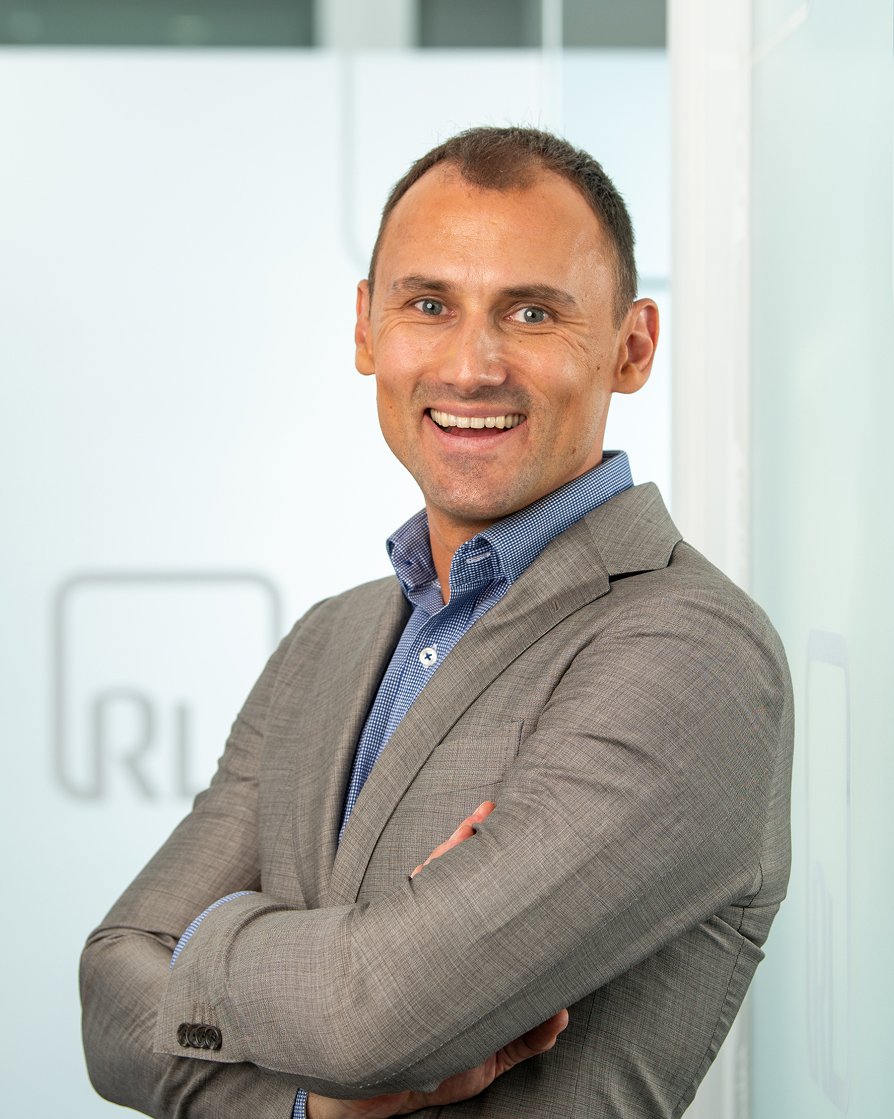
Martin has run dust disease matters since 2008, including expedited trials and matters taken through to the Court of Appeal. For someone who is seriously unwell, that readiness matters.
★★★★★
I was delighted to receive the support, advice and comfort which navigated me seamlessly through this process. I highly recommend Anthony and Sebastian to anyone.
Nick LOct 2026
★★★★★
Your strategic advice, prompt communication, and high standard of professionalism made the process completely seamless.
NicoleSep 2026
★★★★★
Sebastian and the team put me at ease and made the process very easy.
LeekAug 2026
★★★★★
They listened well and gave very sound advice and approaches to resolution.
SDAug 2026
★★★★★
We are very grateful to Martin Rogalski and his team for all their help and support throughout a long and difficult legal process.
MarcAug 2026
★★★★★
They are so professional with their job and made it so easy for me. I would recommend them to everyone.
David MAug 2026
★★★★★
The service and the professional treatment I received during my claim through Rogalski Lawyers, especially Martin and his staff, was exceptional.
Fred WAug 2026
★★★★★
Listened to my situation and quick settlement.
Adrian AJul 2026
★★★★★
Martin was there every step of the way. He explained everything in a way that was clear and easy for me to understand. I wouldn't have been able to get through this without Martin's team.
Colleen HJul 2026
★★★★★
Martin and his team at Rogalski Lawyers were clear and concise. We would use them again in the future without hesitation.
Jordan GJul 2026
★★★★★
Rogalski Lawyers has given me the time and attention I needed for my case. They have treated me with respect and patience and I am forever grateful for their work.
Lucien LJun 2026
★★★★★
Martin and Kristy made the process of the claim easier than I thought it could be. Always handled professionally and compassionately.
Dave BJun 2026
★★★★★
Jarom, Sebastian and the team kept me informed at every step of the way. The process was made stress free and easy. I can comfortably say that I was in good hands.
Guglielmo TJun 2026
★★★★★
Martin's knowledge of products containing asbestos was extensive, invaluable and only exceeded by his legal knowledge of the multiple steps required. During the process I was always informed on progress by Martin and Cheryl.
Dennis BJun 2026
★★★★★
Their professionalism, expertise, and clear communication made everything straightforward and stress-free.
Alan CJun 2026
★★★★★
When I first met Martin and Kristy, they were very patient with me, especially since I knew nothing about asbestos. They kept in contact with me the whole time and guided me step by step through the process.
Greer FMay 2026
★★★★★
His knowledge is exceptional, and he took the time to guide us through every step, making what could have been an overwhelming process feel manageable.
Terry MApr 2026
★★★★★
The team at Rogalski did first class work in regards to my legal needs, extremely knowledgeable and they did not miss a thing.
Alex BFeb 2026
★★★★★
I had a great experience with Sebastian. He was very helpful, patient and understanding.
Taylor RFeb 2026
★★★★★
Has been really easy and amazing communication. Thank you for assisting with my case.
Gabriel GDec 2025
★★★★★
Compassionate, honest and made sure I understood the process the entire way.
Google reviewDec 2025
★★★★★
They made what was a nervous experience into a reassuring, we have your back experience. The attention to detail throughout was exceptional. Kept us up to date all the time.
Kevin SNov 2025
★★★★★
Sebastian and his team were very passionate about helping me through the process. He explained everything to me.
Jantine BNov 2025
★★★★★
Sebastian, Katie and the team were excellent. I was always kept informed and I was extremely happy with their service.
Armaan WNov 2025
How the firm is run
Small by design.
A senior lawyer on every matter.
No win, no fee on every claim.
Capacity, on purpose
The solicitor-to-client ratio is kept deliberately low, so each lawyer has real room for the people on their list. That is the reason the firm is the size it is.
Direct contact
You have your lawyer's mobile and email, not a switchboard. Call or text, and you reach the person running your file.
No win, no fee, no funders
Every claim is run no win, no fee*. The firm carries the costs of running it, doesn't use litigation funders, and puts the terms in writing before you sign.
Plain English, technically precise
The law is explained rather than name-dropped. Where a claim turns on the detail of an exposure history or a policy definition, that detail is set out properly.
The team
Every lawyer carries a caseload built to leave room for the people on it, and the lawyer you meet first is the one who runs your matter.
Common questions
What a claim costs, how long it takes, and whether you have one at all. If your question isn't here, ask. There's no charge for asking.
Request a free case reviewIt depends on the claim, and anyone who gives you a number without hearing the facts is guessing. A straightforward WorkCover Queensland statutory claim can resolve in months. A common law claim can take longer, because fault has to be established, but it can also move quickly depending on the circumstances. A court claim for a latent disease like mesothelioma or silicosis is more involved again, because exposure histories often reach back decades and across several employers.
Timing is fact dependent, and a claim can be expedited where there is urgency, which is common in mesothelioma matters. What counts for more than the calendar is that a claim is started promptly and then progressed diligently and efficiently, which is how this firm runs a file. A lawyer can give you a realistic range once they understand your situation, and you are entitled to ask for one before committing to anything.
This firm acts on a no win, no fee basis on every claim it takes on, and doesn't use litigation funders, so no third party takes a cut of what you recover.
In most claims, the other side contributes to your legal costs, so legal costs can often be claimed in addition to the compensation recovered rather than taken out of it. Anything that remains is generally dealt with at the end from the amount recovered, rather than billed to you along the way. Interest is only charged on unpaid legal costs, which is rare in practice for that reason.
Disbursements (medical reports, court fees, expert opinions) are a separate and real cost on any claim, commonly running to several thousand dollars. How they are handled is explained in writing before you agree to anything.
That depends on what happened and what it has cost you. It is worth being plain about the arithmetic: on a very small claim, the cost of running it can outweigh what reaches you at the end. As a rough guide, claims worth less than around $10,000 often aren't worth pursuing once disbursements are accounted for.
The firm does act on smaller claims. It just won't tell you a claim is worth running when it isn't. If there's no claim worth making, you'll be told that, which is a useful answer in itself.
Nothing. The first conversation costs nothing and commits you to nothing. You are not signing anything, and you can take the answer away and think about it.
If you do go ahead, the things that carry any risk on your particular claim, including disbursements and what happens if the claim does not succeed, are set out in a written costs agreement before you sign it, in plain terms, so the decision is yours and an informed one.
Not always. Some compensation is available simply because something happened to you. A WorkCover Queensland claim is the clearest example: if something happened at work, you can generally access statutory benefits without proving your employer was negligent. Compulsory Third Party claims after a motor vehicle accident and TPD claims through superannuation work on similar principles.
Other claims require proof that another party failed to take reasonable care and that the failure caused the harm. A common law damages claim after a workplace incident, a public liability claim, a medical negligence claim, and a court claim for asbestos or silica disease all fall into this group. They are usually worth considerably more than statutory benefits, and they are harder to prove.
The fault-based one. After a workplace incident in Queensland you can have both at once: a statutory WorkCover claim that pays benefits regardless of fault, and a separate common law damages claim against your employer if their negligence caused the harm.
The second is usually worth considerably more, and it has its own steps and its own deadlines. Working out which claim you actually have is the first useful thing a lawyer does, and it takes a conversation rather than a form.
General claims work (WorkCover, public liability, motor vehicle accidents, TPD and medical negligence) is Queensland-based. Dust disease claims are handled nationally, because exposure histories often span more than one state and people move around the country over a working life.
A WorkCover claim is generally no-fault. You don't need to prove anyone was at fault to access statutory benefits after a workplace incident. A court claim is different: it requires proving negligence, meaning someone else's failure to take reasonable care has to be established. Which pathway applies is something a lawyer can work out with you, and some situations support both.
If the claim doesn't succeed, you are not charged the firm's professional fees, and you are not charged the disbursements either (medical reports, court fees and similar out-of-pocket expenses). The firm writes them off rather than passing them on to you. Where the claim does succeed, the other side normally contributes to your legal costs, so costs can often be claimed in addition to the compensation recovered rather than taken out of it, and nothing is billed to you along the way. The terms are set out in writing before you agree to anything. *Conditions apply.
Yes, and they often apply strictly. The limits turn on the type of claim and on which state or territory the incident or exposure happened in, so a figure that is right in Queensland can be wrong in New South Wales. In Queensland, a WorkCover statutory claim is generally lodged within six months of becoming entitled to compensation, which is usually when a doctor first assesses your condition, and a common law claim generally carries a three-year limitation period from the date of the incident. Queensland motor vehicle claims have earlier notice requirements to the CTP insurer. Latent onset conditions work differently again: Queensland has no court time limit for dust-related conditions, and statutory claims there generally run from diagnosis rather than exposure. Missing a time limit can mean losing the right to compensation for good, and delay can count against a claim in other ways, so it is worth having a claim looked at without delay. Limitation periods can sometimes be extended, and if you think a deadline may have passed it is still worth asking.
Most claims resolve without a trial. The process includes a compulsory conference, a formal settlement meeting, before court proceedings can be started, and the majority of matters resolve at or around that point. Some don't, and those proceed. Whether to accept an offer or press on is your decision, made with advice.
You describe what happened, when, and how it has affected you. You'll be asked about medical treatment and time off work. At the end of it you should know whether there's a claim worth looking at, which pathway it would run through, and what the next step is. There's no cost.
That can't responsibly be answered on a website, and the firm won't estimate it before understanding your situation. The amount turns on the condition, its effect on your work and life, your age, your treatment and the pathway involved. Any figure offered to you before that assessment is guesswork.
Often, yes. Family members frequently make the first enquiry on behalf of someone who is unwell, and in some circumstances a claim can be brought by or on behalf of a person who has died. It is worth asking early rather than waiting.
No. Whether you have a claim depends on how the exposure or incident happened, who was responsible, and which pathway applies. A diagnosis is the starting point for that conversation rather than an automatic entitlement.
Most often yes, but it depends on the circumstances. Asbestos-related diseases commonly develop decades after exposure, and time limits for latent onset diseases generally run from diagnosis rather than from the exposure. Many people who are now unwell were exposed through home renovations or through buildings that had asbestos products already in place, so it is worth a conversation even if your situation doesn't look like the usual picture.
Recognition
Doyle's Guide is an independent legal directory. It publishes annual lists compiled from surveys of practitioners and clients. The firm has been listed for dust diseases in the years below.
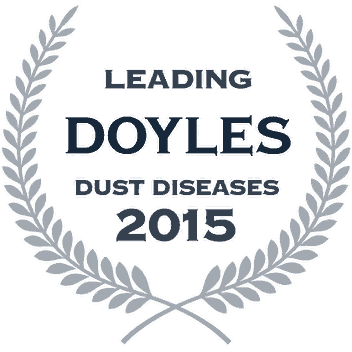
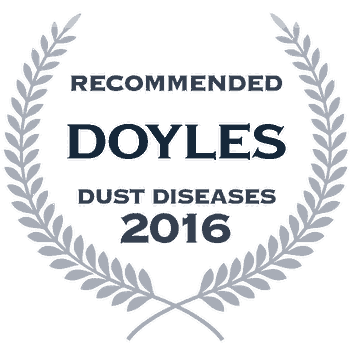
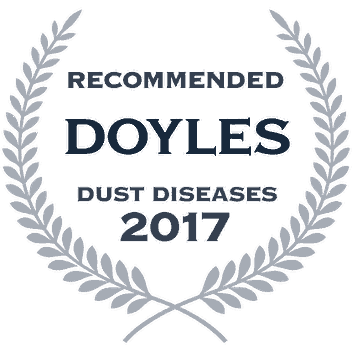
Listings are compiled and published by Doyle's Guide, not by this firm.
Offices
Head office in Stones Corner, ten minutes from the Brisbane CBD, with parking on site. Dust disease clients are seen anywhere in Australia, and where someone is too unwell to travel, the firm travels to them.
Free case review
Tell us what happened and a lawyer will review it and call you back the same business day. There's no cost to finding out where you stand, and no obligation to go further.